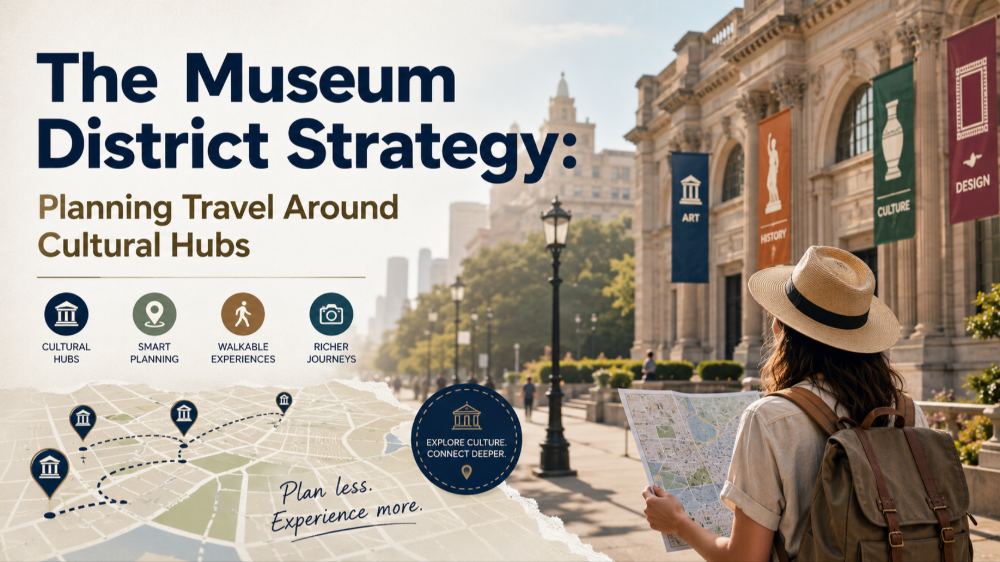
Why Museum Districts Make Perfect Travel Anchors
Most travelers plan trips around famous landmarks, then scramble to fill the gaps between them. But there's a smarter approach: build your itinerary around museum districts. These cultural clusters offer natural walking routes, authentic neighborhoods, and built-in rainy day backup plans.
Museum districts attract locals, not just tourists. That means better coffee shops, real restaurants instead of tourist traps, and walkable streets designed for lingering rather than rushing. You'll spend less time on transportation and more time actually experiencing a place.
Finding the Right District for Your Interests
Not all museum districts are created equal. Before booking anything, research which neighborhoods align with what you actually want to see.
Berlin's Museum Island concentrates ancient history and archaeology. Vienna's MuseumsQuartier focuses on modern and contemporary art. Boston's Fenway area mixes fine art with science museums. Each attracts different crowds and offers distinct neighborhood vibes.
Look beyond the famous institutions. Every major museum district includes smaller galleries, artist studios, and cultural centers that rarely appear in guidebooks. These spaces often have free admission, no lines, and more experimental exhibitions.
The Three-Day District Deep Dive
Instead of trying to see an entire city, dedicate three days to fully exploring one cultural district. This approach transforms surface-level tourism into genuine neighborhood knowledge.
Day One: Morning Museum Marathon
Start with the district's most popular museum right when it opens. You'll beat the crowds and have two hours of near-empty galleries. Visit your second-choice museum in the early afternoon when tour groups are at lunch.
Skip the museum cafeterias. Walk three blocks in any direction to find where museum staff actually eat.
Day Two: Small Galleries and Side Streets
This is when the strategy pays off. You already know the area's layout, so you can wander confidently. Check opening hours for smaller galleries—many close on Mondays or Tuesdays.
Look for artist cooperatives, university galleries, and cultural centers affiliated with specific communities. In Paris's Marais district, you'll find specialized museums dedicated to everything from hunting to magic. London's Bloomsbury hides medical history collections and architectural archives between its famous institutions.
Day Three: The Neighborhood Itself
Forget museums entirely. Explore the bookstores, markets, and parks that exist because of the cultural district. These neighborhoods attract creative professionals, which means better independent shops and more experimental restaurants.
Find the local library branch. Public libraries in museum districts often have architecture exhibitions, historical photography collections, and reading rooms open to visitors.
The Weather Backup System
Museum districts provide natural contingency planning. When rain cancels your walking tour, you're already surrounded by indoor alternatives.
Create a tiered list before you arrive:
- First tier: Museums requiring advance tickets
- Second tier: Free galleries and cultural centers for bad weather pivots
- Third tier: Cafes, bookstores, and covered markets for extreme weather
This system eliminates the stress of scrambling for indoor activities when forecasts change.
Finding Local Lunch Spots Near Museums
The blocks immediately surrounding famous museums are restaurant wastelands. But walk seven to ten minutes into the residential edges of cultural districts, and you'll find authentic neighborhood spots.
Look for restaurants with handwritten specials boards, not laminated menus in six languages. Check what time locals eat—in Madrid's Recoletos area, the good restaurants near the Prado don't even open for lunch until 2 PM.
University cafeterias near museum districts often welcome the public. They're cheap, fast, and frequented by students who know the real food scene.
The Evening Advantage
Many museums offer extended evening hours once or twice weekly, often with reduced admission. These evening sessions attract more local visitors and fewer tour groups.
The neighborhoods transform after traditional museum hours. Cultural districts host concerts, lectures, and film screenings in the same buildings you visited during the day. Check event calendars for museums' public programming—most of it is free or very cheap.
Practical Planning Tips
Book accommodations within walking distance of your chosen district, even if it costs slightly more. You'll save the difference in transportation and gain flexibility to return to your room between activities.
Purchase any museum passes on your first morning, not in advance. You'll have a better sense of what you actually want to see after walking the neighborhood. Many cities offer 48 or 72-hour passes that become economical if you visit three or more institutions.
Download offline maps marking not just museums but also the parks, markets, and public squares within your chosen district. These spaces provide free rest stops and people-watching opportunities.
Making the Strategy Work in Smaller Cities
This approach isn't just for major capitals. Mid-sized cities often have compact cultural districts that concentrate their best offerings in a few walkable blocks.
In places like Salzburg, New Haven, or Edinburgh, a single museum district can effectively be your entire trip. You'll have time to revisit favorite spots, develop a regular coffee shop, and start recognizing neighborhood faces.
Bringing It All Together
The museum district strategy turns overwhelming trip planning into a focused exploration. Instead of exhausting yourself crisscrossing a city, you develop genuine familiarity with one neighborhood. You'll return home with deeper knowledge of a place rather than fragmented memories of rushing between landmarks.
This focused approach also makes it easier to return. You're not trying to "do" an entire city—you're getting to know a neighborhood. That takes pressure off and creates better travel experiences.
Discover real places recommended by local explorers on Nohaya, where you'll find insider perspectives on cultural districts and neighborhood guides that go beyond the standard tourist itineraries.